We use cookies to make your experience better. To comply with the new e-Privacy directive, we need to ask for your consent to set the cookies. Learn more.

Try Premier TDS Calculator
Total dissolved solids (TDS) is a measure of the combined content of all inorganic and organic substances contained in a liquid. These inorganic and organic substances are normally referenced for freshwater systems.
You can use the HM digital® TDS meter to determin if your Reverse Osmosis membrane is removing impurities from your water. The Premier item number for the TDS meter is 273001.
Follow the steps below to have our online calculator calculate your effectiveness of membrane.
Now that we have the membrane's rejection rate, what does this mean?
The rejection rate is the percentage of the amount of TDS (Total Dissolved Solids) eliminated from the tap water by the membrane. Example: A 90% rejection rate means that 90% of the TDS has been eliminated from the tap water.
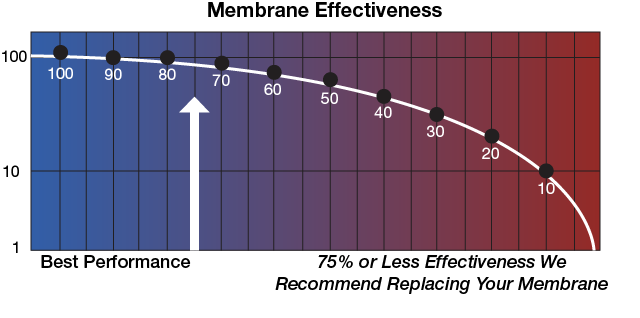
If your Membrane Effectiveness is between 75-100% your membrane is operating within factory specifications.
If your Membrane Effectiveness is 74% or less, we recommend replacing your membrane, flow restrictor, and pre/post filters.
What is TDS and why should I care?
Total Dissolved Solids (TDS) refers to the combined amount of inorganic and organic substances dissolved in water, such as minerals, salts, metals, and small amounts of organics. When you test your tap or RO water, TDS gives you an indicator of how loaded the water is with these dissolved substances. Understanding your TDS helps you ensure your water filtration system is doing its job and that your water quality is in a good range for taste, appliances, and health.
How do I test for TDS at home?
Testing for TDS is simple. Use a pocket TDS meter to measure your tap or feed water. Rinse it properly, then measure your treated or filtered (for example, RO) water. Enter those two values into our calculator to see how effective your membrane is. A large difference between the feed and treated values means your system is doing a good job reducing dissolved solids. If your meter reading is high for the treated water, it may signal that maintenance is needed.
What is a good TDS level in household water?
There is no single perfect number for all households, but generally, lower is better for drinking and filtered water. If your RO-treated water shows a TDS reading in the low tens (ppm) while your tap water is much higher, that is a strong result. If your membrane effectiveness is between 75% and 100%, your system is operating within normal specifications. If it is below 75%, you may need to change the filters or membrane.
What should I do if my membrane rejection rate is low?
If your calculated rejection rate is lower than expected, for example, below 75%, try the following steps:
- Check that your pre and post filters are fresh and properly installed.
- Make sure the flow restrictor is correct and system pressure is within range.
- Replace the RO membrane if it is old or has been exposed to high TDS feed water for a long time.
- Review the feed water TDS reading. If it is extremely high, it may reduce the membrane's life and performance over time.
Proper maintenance can restore system performance and protect your drinking water quality.
Why does my tap water TDS change, and does it matter?
Your tap water TDS can vary over time due to changes in the water source, seasonal variations, treatment processes, or plumbing conditions. A gradual increase in tap TDS might mean more dissolved minerals or salts are entering your supply. While TDS alone does not specify which substances are present, a rising level may be a signal to check your water filtration system or consider additional treatment, such as pre-filtration or water softening.
How does TDS relate to other water quality factors?
TDS is one indicator of water quality, but not the only one. Low TDS does not always mean the water is safe, and high TDS does not necessarily mean it is unsafe. Harmful contaminants like bacteria or heavy metals might not show up in a TDS reading. Likewise, water with high mineral content (and higher TDS) may not pose a health risk but could affect taste, scale buildup, or appliance lifespan. It is a good idea to pair a TDS test with a broader water quality evaluation or to use certified filters and RO systems as part of your home's water treatment plan.
Check out some of our TDS Solutions
-
 RO Pure Plus (VOC) Reverse Osmosis Water Filtration SystemSKU: WP531417
Built-in Check Valve Shut-off and Easy Push Button Filters
0 reviews$400.99 -
 UF-3 Water Filtration SystemSKU: WP531130
Three-Stage Under Counter Ultra Water Filtration System
Reduces harmful chemicals and odor in water by 99.8%
0 reviews$224.59 -
 Whole House 50-Micron Sediment Water FiltrationSKU: WP500224
Designed for easy integration into your home’s plumbing, this unit acts as your first line of defense against particulate contamination.
0 reviews$59.99 -

-
 Pocket TDS Meter with CaseSKU: 68109020TDS Meter, 0-9990 PPM, Vinyl Case0 reviews$27.45Out of stock